Online
Over the internet, on weekday evenings.
Workshop topics
Monthly closing at a company registered for VAT in Indonesia (PKP), from transaction records to reports and tax. AI helps research the rules, record journals, reconcile the bank, and draft reports. Approvals, payments, and tax filing stay with the people in charge.
Who it's for: Finance, accounting, and tax staff, and the managers who review the reports. In a small business one person may hold several of these roles.
Sessions, slides, and practice files are in Bahasa Indonesia.
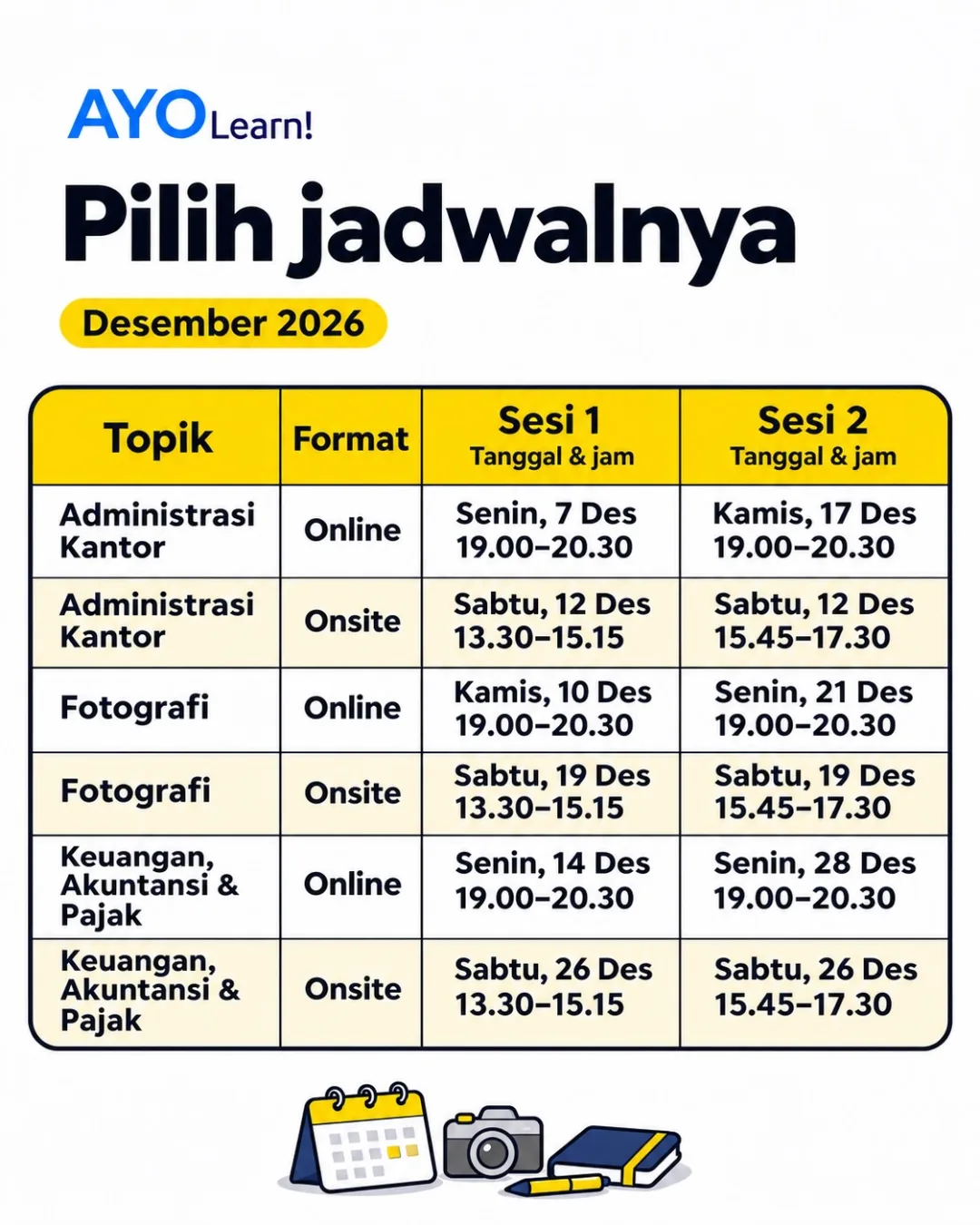
Choose the online or onsite class. Each class has two sessions.
| Topic | Format | Session 1 | Session 2 | Register |
|---|---|---|---|---|
| Finance, Accounting, and Tax | Online | Register | ||
| Finance, Accounting, and Tax | Onsite | Register |
All times are WIB (UTC+7). Onsite classes are held around Gading Serpong and BSD. The venue is shared after registration, and food and drinks are included.
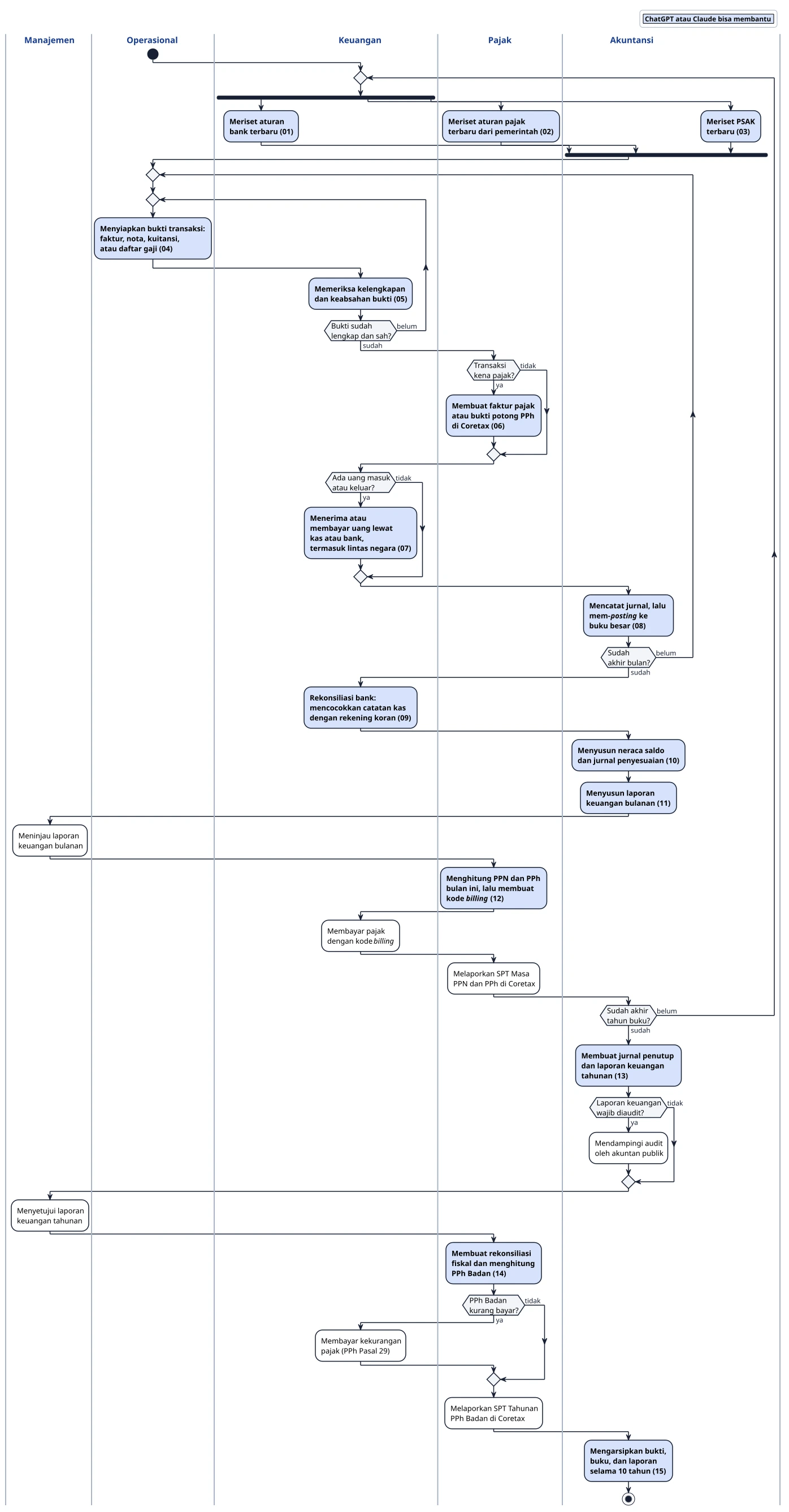
The diagram shows the finance, accounting, and tax workflow of a PKP company, with five roles: management, operations, finance, tax, and accounting. Light blue activities in bold can be assisted by ChatGPT or Claude, and are numbered (01) to (15).
Finance researches the latest bank rules, tax researches the latest tax regulations, and accounting checks the latest Indonesian accounting standards (PSAK), all at the same time.
Operations prepares the transaction records and finance checks them. If tax applies, the tax team issues the tax invoice or withholding slip in Coretax, the Indonesian tax authority's system. Finance receives or pays the money, and accounting records the journal and posts it to the ledger.
Finance reconciles the cash records with the bank statement. Accounting prepares the trial balance, adjusting entries, and monthly report for management to review. Tax calculates VAT and income tax, finance pays, and tax files the monthly return in Coretax.
Accounting prepares the closing entries and the annual report. Once management approves it, tax prepares the fiscal reconciliation and calculates corporate income tax. Records, books, and reports are archived for ten years.
Finds new rules from Bank Indonesia, the financial services authority (OJK), and the company's bank, such as transfer fees, transaction limits, and foreign exchange rules.
Finds new tax laws and regulations, then summarises what changed and when it takes effect.
Finds the latest accounting standards and amendments from the Indonesian standard setter (DSAK IAI) and explains how they affect the company's books.
Drafts sales invoices or receipts from a template. Claude Code or Codex fills the template for many transactions at once from a spreadsheet.
Reads photos or PDFs of records, moves the contents into a spreadsheet, and flags incomplete ones.
Helps pick the tax type and rate, then calculates the amount. Claude Code or Codex fills the Coretax import template from a spreadsheet.
Explains the right payment route, such as BI-FAST, RTGS, or SWIFT, with the fees, exchange rate, and documents the bank asks for.
Suggests the debit and credit accounts from the description. Claude Code or Codex turns the bank's CSV statement into journal lines.
Matches the bank statement against the cash records and lists the differences to check.
Calculates depreciation and accruals, proposes adjusting entries, and checks that debits equal credits.
Builds the financial statements from the trial balance in Excel and writes a short summary for management.
Totals output VAT, input VAT, and withheld income tax, then works out what to pay. The payment code is still created by a person in Coretax.
Drafts the closing entries and the notes to the statements, then combines twelve monthly reports and checks the totals.
Flags expenses that may not be tax deductible, then calculates corporate income tax.
Files everything into folders by year and month and writes an archive index.
The workshop draws on the AYO Learn! module for this topic. Every exercise comes with a ready-to-use request, practice data, and a sample result to compare against.
Chapter 1
Chapter 2
Chapter 3
Chapter 4
Chapter 5
Chapter 6
PT Seruni Mebel Jepara (fictional) makes teak furniture for hotels, offices, and interior shops. It is VAT-registered (PKP), with 12 permanent staff and a current account at BCA. The exercises start with the October 2026 closing on Monday, 2 November 2026. The company and its transactions are made up, but the rules, rates, bank file formats, and Coretax templates are real.
Python is installed on the laptop for the AI agents. No programming is needed.
From Instagram

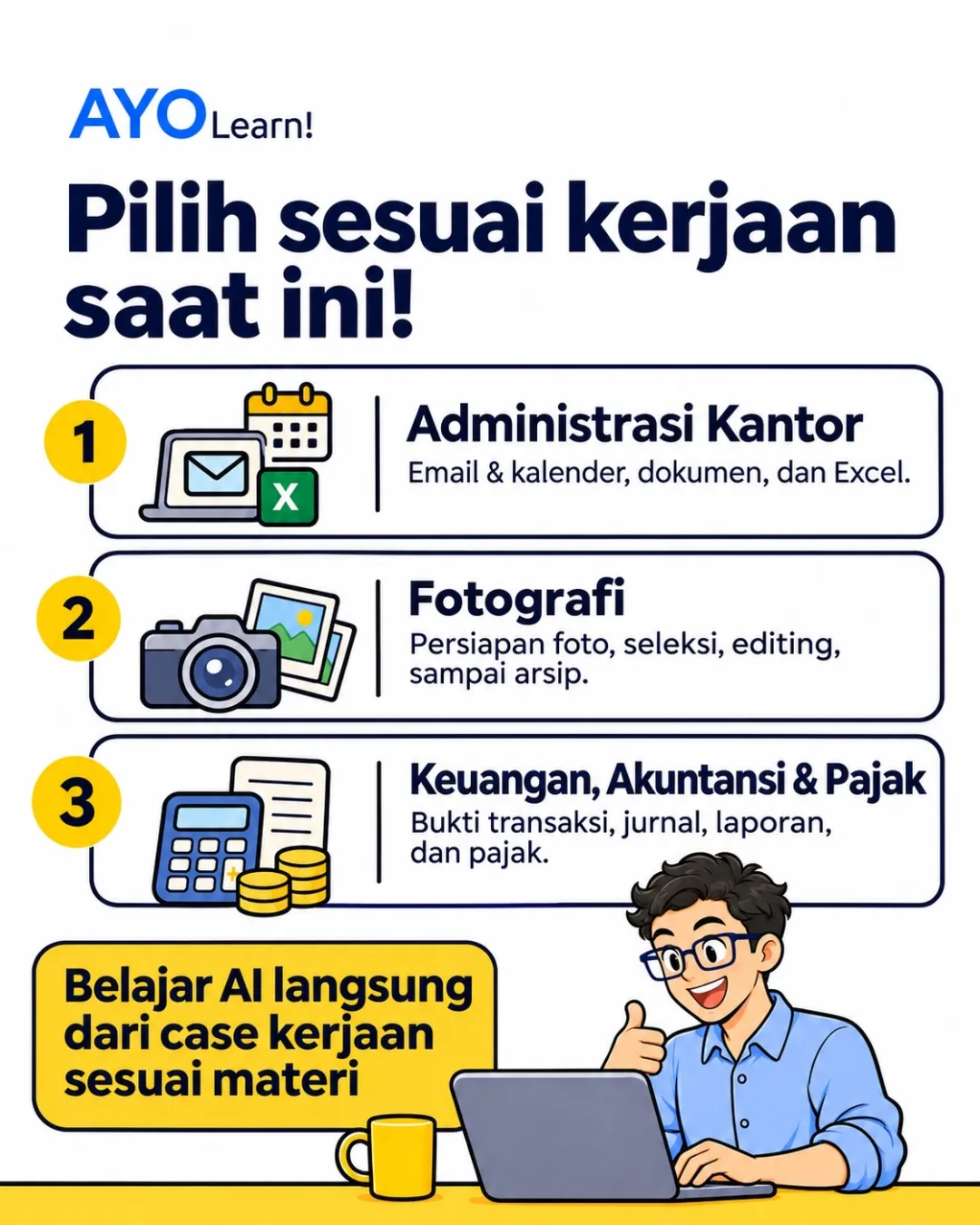
Email and calendar, documents, and Excel.
View details
Shoot preparation, culling, editing, and archiving.
14 exercises · 10 AI-assisted steps
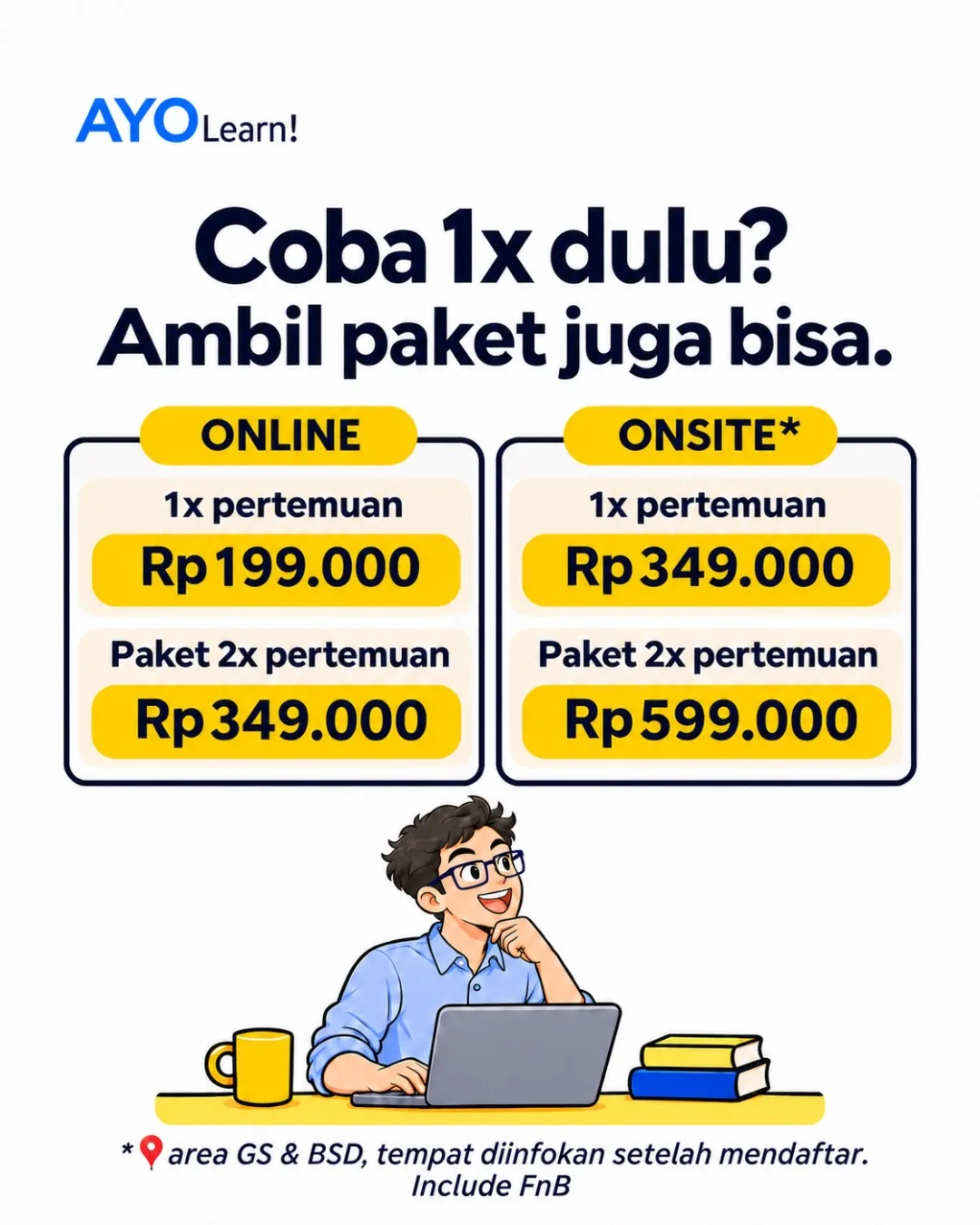
View detailsFrom IDR 199,000, with hands-on practice for everyday work.